Portiva’s remote medical scribes are familiar with leading EHR platforms, including Epic and Cerner. They adapt quickly to a practice’s existing EHR workflow rather than requiring the practice to switch systems.

Portiva provides trained remote medical scribes who document patient encounters, update your EHR, and prepare notes for provider review in real time or after each visit.
Jennifer: Hello everyone, and welcome to another episode of Ask the Doc. I’m your host, Jennifer Filsen, and today I have with me Sanju Zachariah of Portiva. Welcome, Sanju.
Sanju: Thank you, Jennifer. It’s a pleasure.
Jennifer: I’m so glad you’re here. So tell us all about Portiva and what you guys do.
Sanju: Yeah, definitely. Thanks for having me. A little background about Portiva: my name is Sanju Zachariah, and I’m the owner and CEO of Portiva. We’re a medical staffing company headquartered in Collegeville, Pennsylvania, in the greater Philadelphia area. We started back in 2009, and we had a different focus back then. We were engaged in back-office operations for doctors. We serve healthcare practitioners in general, so we have some dentists, some veterinarians, and so on. Back in 2009, we were focused on back-office operations, doing a lot of medical transcription. That was the main bread and butter of the company.
That continued until the pandemic hit. That’s when things shifted a bit because we started getting calls from our clients asking for more help, especially with front-office operations. We had a situation where people couldn’t come into the office anymore, like the medical assistants, because of restrictions. Doctors were strapped, managing everything themselves. So that’s when we started getting calls from doctors asking, “Do you have people who can help us with phone calls, scheduling, billing, and so forth?” That’s when we started our virtual medical assistant service. We added that to Portiva’s portfolio. That’s how it all began.
Jennifer: That is amazing, and you’re absolutely right. We’re already seeing that doctors are busy doing what they do, practicing and seeing patients. But to also be the butcher, the baker, and the candlestick maker within your own practice, running the back end, running the front desk, doing all the paperwork, and making sure everything’s sterilized, that’s a lot for one person to handle. So it’s great that you guys are providing a service that gives them the help they need. I’d imagine that with the labor shortage we’re currently seeing, you really are a blessing to a lot of these doctors and practices because it’s hard to find help these days. So are you doing temporary staffing specifically for this, placements that end once they’re no longer needed, or is it more of a headhunting model where you’re placing people permanently in these roles?
Sanju: It’s a permanent placement model. Basically what we do, and I don’t want to call it “disruption,” maybe that’s too harsh or extreme, but we’re looking to disrupt the traditional medical staffing industry. In the old-school way, doctors typically reach out to a medical staffing firm and say, “We need a medical assistant or certified medical assistant,” and they’d have to wait weeks, these days even months, because it’s hard to find people who want to work in an office. A lot of people have retooled because of the pandemic. They’re not going back into offices. Every industry is going through this, restaurants, hospitality, travel. People are having a hard time finding good people willing to work on-site. They’d rather work online.
So basically what we do, Jennifer, is maintain a roster of pre-vetted candidates with medical backgrounds. A lot of them are former nurses, and everything can be done remotely using voice-over-IP and conferencing technologies. A medical staff member gets interviewed and, depending on the doctor’s needs, whether it’s billing, medical scribing, patient scheduling, or other specialties, we already have candidates ready. They go through a process we call “Portiva University,” where they receive rigorous training and testing. Once they’re ready to be placed, they go into a queue. When a doctor reaches out to us, we provide a list of candidates, typically two or three, and ask the doctor to choose the one who resonates best with their practice.
Once that happens, they come on board, and we’ve had a wonderful experience so far. Doctors really like them. They’re logged in when the doctor comes into the office and typically log out when the doctor leaves, though sometimes they’re doing follow-up work even after the doctor leaves, like documentation and catching up. The great thing is that we become an extension of the doctor’s office, and it saves the doctor a lot of time. We have doctors who love their virtual assistants because they’re not taking up physical space in the office. We handle all the benefits, including health insurance, retirement plans, and everything else. The doctor just pays a flat hourly rate.
In the worst case, if the doctor doesn’t feel it’s the right fit after a month or so, which does happen sometimes, we can immediately provide another set of candidates. Compared to the traditional model, where a doctor has to wait weeks, go through interviews, and then start all over again if it’s not the right fit, with Portiva we already have candidates lined up and ready to go. We can typically place a doctor with a trained candidate within hours. We also have doctors’ offices that need more than one virtual assistant, or VA. Those are some of the benefits of the service we provide.
Jennifer: Amazing. Oh my gosh, I love your business model. You’re doing some great work, Sanju, truly. Now, we’re running out of time, but I tell you what, well have to have you come back in the future and tell us a little more about your origin story. In fact, let’s do a quick 30 seconds right now. How did you get into this?
Sanju: Yeah, no, it’s a good question. Portiva started back in 2009, and I’m an engineer by trade, but I have family members and friends in the medical field, some of them doctors. The idea came about because of a bad experience I had at a doctor’s office before 2009. I waited about 45 minutes to be checked in because my primary care office was so inundated, with the staff juggling so many different things. That’s when the idea originated. I felt like doctors need help managing their practice. As good as they are, and they truly are medical professionals, their time should be focused on the patient, not on administrative tasks. That’s how it all started, and that’s how the idea originated.
Jennifer: I love it. You didn’t just complain, you found a solution, and now you have a very happy business because of it. I love that. Well, we’ve run out of time, but truly, thank you, Sanju, for being here. And everyone, thank you so much for watching. I hope you enjoyed hearing about the good work Portiva is doing. If you want to find out more, please go to BuzzTV.iab-buzz.com. Thank you so much for watching, and we’ll see you next time. Bye.
Remote support for scheduling, documentation, and patient care to improve practice efficiency.
Dental assistants can work remotely by logging into the practice management software to manage dental practices.
Prior authorization prevents unexpected costs for doctors and unnecessary patient expenses, saving money for both.
Virtual assistants automate insurance verification and ensure patients’ insurance information is accurate.
From scheduling appointments and handling patient inquiries to managing records and verifying insurance.
Enhance provider communication, convert audio to accurate records, and maintain secure electronic medical records.
Medical billing virtual assistants are gaining popularity for streamlining operations and boosting revenue in medical offices.
VEAs help streamline operations, improve productivity, and allow executives to focus on strategic decision-making.
Completed Task
Happy Doctors
Average Rating
Expert VAs
A remote medical scribe is a trained documentation professional who listens to patient encounters through a secure connection and enters provider-directed clinical information into the practice’s EHR.

A remote scribe listens to a patient encounter through an approved secure connection and records the clinical information into your EHR history of present illness, review of systems, exam findings the provider states aloud, assessment, and the plan.
The scribe documents. The provider decides. Every note returns for review, correction, and signature before it becomes part of the record a remote scribe never diagnoses, treats, or prescribes.
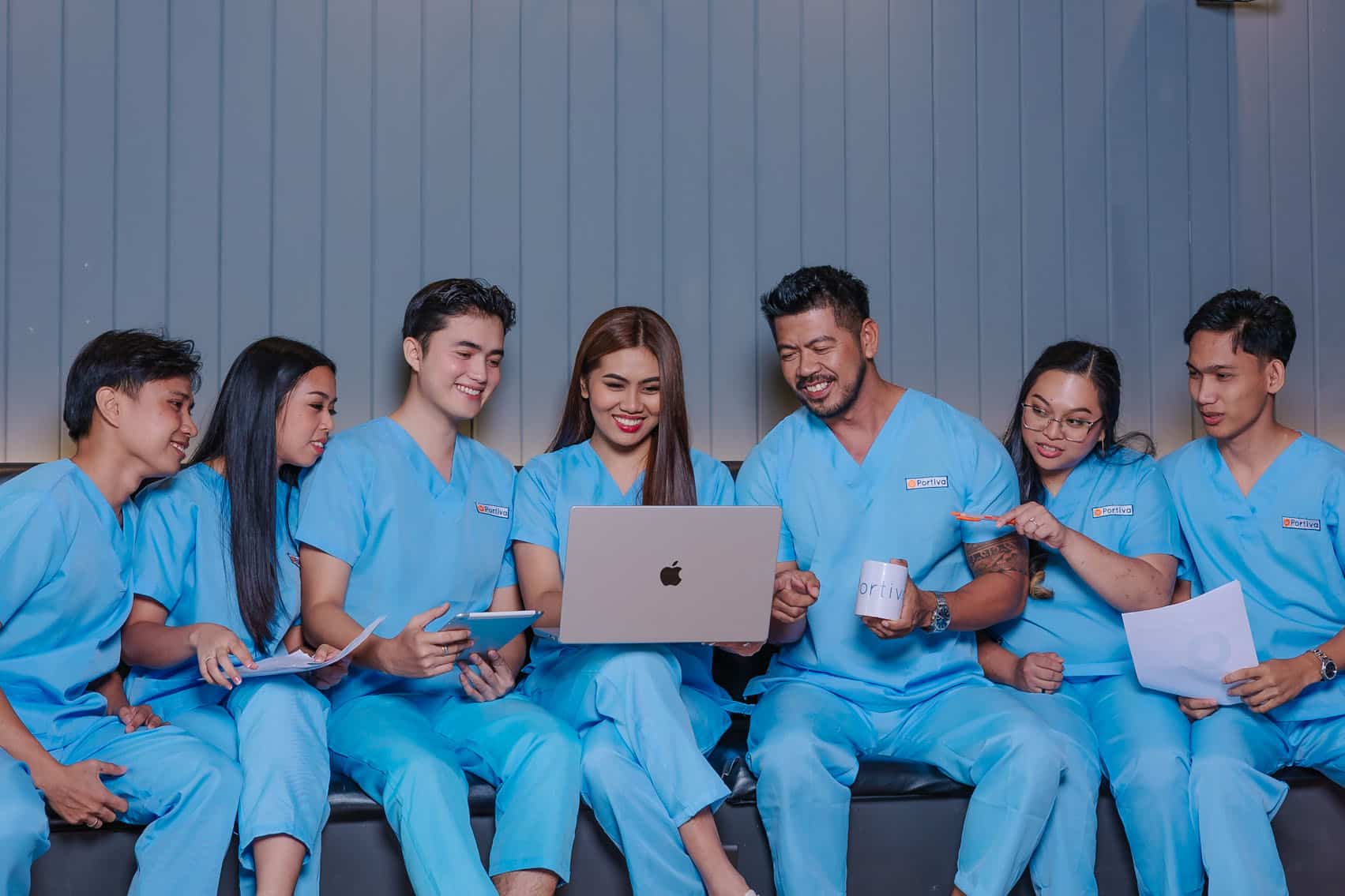
During live remote scribing, the scribe joins the patient encounter through an approved audio, video, or telehealth connection and prepares the note in real time for provider review.
A practice may need a remote medical scribe when clinical documentation takes providers away from patient care or requires significant after-hours charting.
Documents what's said during the encounter
Updates patient history on provider direction
Enters assessment and plan as dictated
Prepares structured visit notes in the EHR
Organizes relevant labs and imaging
Applies your approved templates and macros
Drafts follow-up instructions for review
Drafts follow-up instructions for review
Through an approved audio, video, or telehealth connection, the scribe listens and charts in real time. The note is ready for review the moment the visit ends.
The provider supplies an approved recording, dictation, or summary once the visit is over, and the scribe prepares the note afterward no live participation needed.
Some practices land on a mix an AI tool drafts, a person reviews, the provider signs.
| COMPARISON POINT | PORTIVA REMOTE SCRIBE | IN-PERSON SCRIBE | AI DOCUMENTATION TOOL |
|---|---|---|---|
| Starting cost | From $10/hr | Salary + overhead | Subscription / usage |
| Office space | Not required | Usually required | Not required |
| Who documents | Trained human, remote | Trained human, on-site | Software draft |
| Provider review | Required | Required | Required |
| Best fit | Human help, no added headcount | Wants someone on-site | Comfortable reviewing generated drafts |
Access is role-based and limited to what the assigned scribe needs. Before the first encounter, Portiva and your practice confirm the details below together.
Clinical Study Data
Lehigh Valley Health Network study, n = 50 physicians
We provide dedicated support for all medical specialties, ensuring comprehensive and tailored solutions.
── WHO'S BEHIND THIS

Sanju Zachariah
Founder & CEO, Portiva
Sanju Zachariah is the Founder and CEO of Portiva, a healthcare staffing company he established in 2009 to help medical practices reduce administrative burdens and operate more efficiently. Before founding Portiva, Sanju worked as a management consultant at Accenture and PwC, where he gained extensive experience in process improvement and operational strategy.
Inspired by firsthand frustrations with inefficiencies in healthcare administration, he built Portiva to provide scalable virtual support that allows healthcare professionals and business leaders to focus on higher-value work.
2009
3
US
Calvin Elado
“We were overwhelmed with calls while our staff focused on in-clinic patients. Portiva came highly recommended, and since bringing on Jennifer as our Virtual Front Desk Receptionist, things have run much more smoothly.”
Stephen Sisselman
“I am currently employing and managing 3 virtual medical assistants in various roles including billing, population health and back office. These exemplary individuals are smart, self-starters who can be trained to perform new tasks.”
Aly Gonzalez
“Prior to Portiva, I used another virtual staffing agency and I was not happy with the candidates or the service. Portiva does an excellent job pre-screening qualified candidates that meet the requirements of the job.”
Brianna Gunther
“It has been a pleasure working with Portiva and their VMAs. Before working with them, we faced challenges managing the increasing workload that came with our growth, especially with limited on-site space.”
Find answers to your queries about Portiva’s remote medical scribe services.
Portiva’s remote medical scribes work from a secure remote location and connect virtually to your practice’s phone line and computer system rather than being on-site. This connection is set up through a secure, authorized login process so documentation and calls are handled just as if the scribe were physically in the office.
A remote medical scribe increases office efficiency, lowers costs compared to hiring in-house staff such as registered nurses, and frees up provider and staff time for direct patient care. The main practical requirement on the client side is a reliable internet connection and clear communication access, since the scribe’s ability to document depends on that connection.
A practice needs its office phone line linked to the scribe and virtual access set up to its computer system so the scribe can log in securely and document in real time. Portiva establishes this through a secure, authorized connection along with a stable internet connection on the scribe’s end.
A remote medical scribe documents the patient visit virtually through a secure connection instead of standing in the exam room, while an on-site scribe is physically present with the provider and patient. This remote setup gives providers the same documentation support without another person occupying physical space in the room, which some patients find more comfortable.
Portiva’s remote medical scribes are familiar with leading EHR platforms, including Epic and Cerner. They adapt quickly to a practice’s existing EHR workflow rather than requiring the practice to switch systems.
Portiva’s remote medical scribe service is billed at $10 per hour rather than a full-time in-house salary. This hourly rate covers documentation and administrative support without the added costs of benefits, equipment, or office space that come with hiring in-house staff.
Portiva’s remote medical scribes are certified, highly trained, and vetted for accuracy, and they work alongside providers in real time so notes can be reviewed as they’re created. Physicians can review and modify documentation during the visit, ensuring the final record accurately reflects the encounter before it’s completed.
Portiva maintains HIPAA compliance by having remote scribes access practice systems through a secure, authorized login process rather than open or shared access. Scribes are trained in HIPAA-compliant data handling to protect patient information throughout the remote documentation workflow.